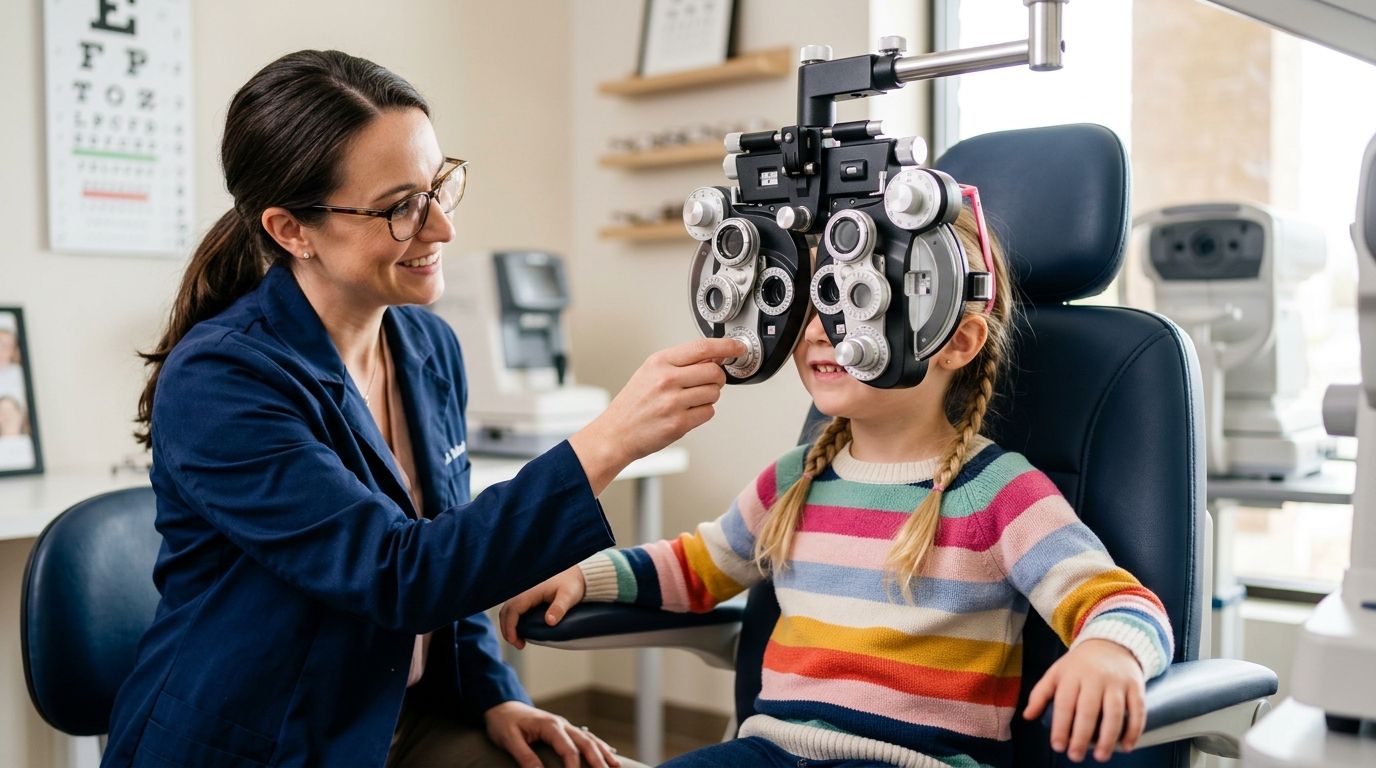
A pediatric eye exam is a full evaluation of a child's vision and eye health, done by an optometrist to catch problems that school screenings and pediatrician checkups routinely miss. Kids can't tell you their vision is off because they don't know what "normal" looks like, so the exam has to test for it directly, not just react to a complaint.
- A pediatric eye exam should happen by 6 months, again at age 3, and before first grade, per American Optometric Association guidelines.
- School vision screenings check acuity only and miss focusing, tracking, and eye-teaming problems.
- Amblyopia (lazy eye) affects roughly 2-3% of children and is far more treatable before age 7.
- Mango Optic in Boca Raton runs comprehensive pediatric eye exams built around the American Optometric Association's age-based schedule.
- Skipping comprehensive exams in favor of school screenings is the most common mistake parents make.
Why pediatric eye exams matter for kids
School screenings test one thing: can the child read letters on a chart from 20 feet away. That catches nearsightedness. It does not catch convergence insufficiency, focusing fatigue, or amblyopia, all of which show up as a kid who avoids reading, loses their place constantly, or gets headaches doing homework.
Amblyopia is the one that carries the highest cost for delay. It responds well to treatment before age 7 and gets harder to correct after that window closes. A pediatric eye exam catches it early because it tests depth perception, alignment, and how the two eyes work together, not just how sharp each eye sees a letter chart.
Update your exam schedule to match your child's age
Age dictates what the exam is even capable of measuring, so the schedule matters more than the calendar reminder.
- Schedule the first comprehensive exam at 6 months old, per American Optometric Association guidelines.
- Book the second exam around age 3, when verbal responses make acuity testing more reliable.
- Get an exam before kindergarten or first grade, before reading demands increase.
- Move to annual exams once school starts, since a child's prescription can shift a full year without a symptom.
- Add an exam any time a teacher flags reading avoidance, squinting, or head-tilting in class.
Watch for the signs that mean don't wait for the next scheduled visit
Some symptoms mean the exam should happen now, not at the next annual checkup.
- Sitting unusually close to the TV or holding books inches from the face.
- One eye drifting inward or outward, especially when tired.
- Frequent eye rubbing unrelated to allergies.
- Complaints of headaches after reading or screen time.
- Covering or closing one eye to see clearly.
- Losing their place while reading a line of text repeatedly.
Choose a comprehensive exam over a screening-only visit
A school nurse or pediatrician screening is a filter, not a diagnosis. It's designed to flag obvious acuity problems and move on.
- A comprehensive pediatric eye exam adds depth perception testing, eye alignment, and color vision.
- It includes dilation when the optometrist needs a clear view of the retina.
- It tests eye-teaming and tracking, the skills reading actually depends on.
- It produces an actual prescription if one is needed, not just a pass/fail.
- Mango Optic runs this level of exam for pediatric patients rather than a quick acuity check, which is the gap most school screenings leave open.
Prepare your child before the appointment
A rushed, cranky exam produces unreliable results, especially for kids under 6.
- Schedule the appointment for a time of day when your child is normally alert, not right after nap or during a growth-spurt cranky window.
- Bring a comfort item for toddlers; it keeps them still for the parts that require focus.
- Skip screen time for an hour before the exam so eyes aren't fatigued.
- Tell your child what to expect in plain terms: lights, letters, maybe some drops.
- Bring any glasses or contacts currently in use, even if they're not being worn consistently.
Ask the right questions during the visit
Parents who ask specific questions get more useful answers than parents who just wait for "everything looks fine."
- Ask whether the eyes are tracking and teaming correctly, not just whether acuity is 20/20.
- Ask if dilation was needed and what it showed.
- Ask for the exact prescription numbers, not just "needs glasses."
- Ask when the next exam should happen given this result.
- Ask what symptoms at home would justify moving the next exam up.
Follow through on any correction or referral
A diagnosis without follow-through is wasted money and wasted risk window, particularly with amblyopia.
- Fill glasses prescriptions within the first week; delayed correction slows adjustment.
- Confirm the fit at pickup, especially for kids under 8 who won't complain about a poor fit.
- Follow patching or vision therapy schedules exactly as prescribed if amblyopia is diagnosed.
- Reassess in 6-12 months if therapy is in progress, not on the standard annual cycle.
- Keep the same provider year to year so exam history and prescription trends stay in one file.
Book a pediatric eye exam
Comprehensive exams for kids, from first visit through school-age checkups.
Comparing your options for kids' vision checks
| Option | Best for | Key limitation |
|---|---|---|
| School vision screening | Catching obvious nearsightedness during the school year | Misses focusing, tracking, and eye-teaming problems entirely |
| Pediatrician well-visit check | A quick baseline at annual physicals | Not a full eye exam; no dilation, no depth or alignment testing |
| Comprehensive pediatric eye exam | Full diagnosis: acuity, alignment, depth, eye health | Takes longer and requires a dedicated appointment |
A comprehensive pediatric eye exam is the only option on this list that actually tests how a child's eyes work together, not just what letters they can read.
Common mistakes parents make with kids' eye care
- Treating school screening as sufficient. It's a filter for gross acuity problems, not a diagnostic exam, and it will pass a child with amblyopia or a tracking disorder.
- Waiting for a complaint. Young kids assume their vision is normal because it's the only vision they know; they won't say "things are blurry" the way an adult would.
- Skipping the 6-month exam entirely. Parents often assume infants are too young to test, but this is exactly the window where alignment problems are easiest to catch and correct.
- Letting a diagnosed issue sit untreated over summer break. Amblyopia treatment loses ground with delay, and "we'll deal with it before school starts" often becomes a lost season.
- Switching providers every year. A pediatric eye exam is more useful as a trend line than a single data point; continuity in the exam record catches slow prescription drift that a one-off visit won't.
FAQ
When should a child have their first pediatric eye exam?
The American Optometric Association recommends the first comprehensive eye exam at 6 months old, followed by another around age 3 and one more before first grade. After that, annual exams are the standard recommendation through school age.
Is a school vision screening the same as a pediatric eye exam?
No. A school screening checks visual acuity only, while a comprehensive pediatric eye exam also tests eye alignment, depth perception, and eye health, catching problems screenings routinely miss.
What is amblyopia and why does age matter?
Amblyopia, or lazy eye, affects roughly 2-3% of children and responds best to treatment before age 7. The earlier it's caught in a pediatric eye exam, the more treatable it is.
What are signs my child needs an eye exam sooner than scheduled?
Sitting close to screens, head-tilting, one eye drifting, frequent headaches after reading, and avoiding books are all signs to move an exam up rather than wait for the annual visit.
Does a pediatric eye exam include dilation?
It can. The optometrist dilates the pupils when a clear view of the retina is needed to fully assess eye health, which a standard vision screening never does.
How often should a school-age child get an eye exam?
Annually. Vision can shift a full prescription step within a year without any obvious symptom, especially during growth spurts.
Can a pediatric eye exam happen even if my child passed a school screening?
Yes, and it should. A passed screening only confirms acuity; it says nothing about tracking, focusing, or alignment, all of which a comprehensive exam covers.
One last thing
The detail parents miss most: a child can have 20/20 acuity and still fail at the skills reading actually requires, like tracking a line of text without losing their place or converging both eyes on a near page without fatigue. That gap is exactly why a pediatric eye exam tests more than the letter chart, and why Mango Optic builds its pediatric exams around the full American Optometric Association schedule rather than a single acuity check. Book the next one before the school year gets ahead of the appointment calendar in 2026.